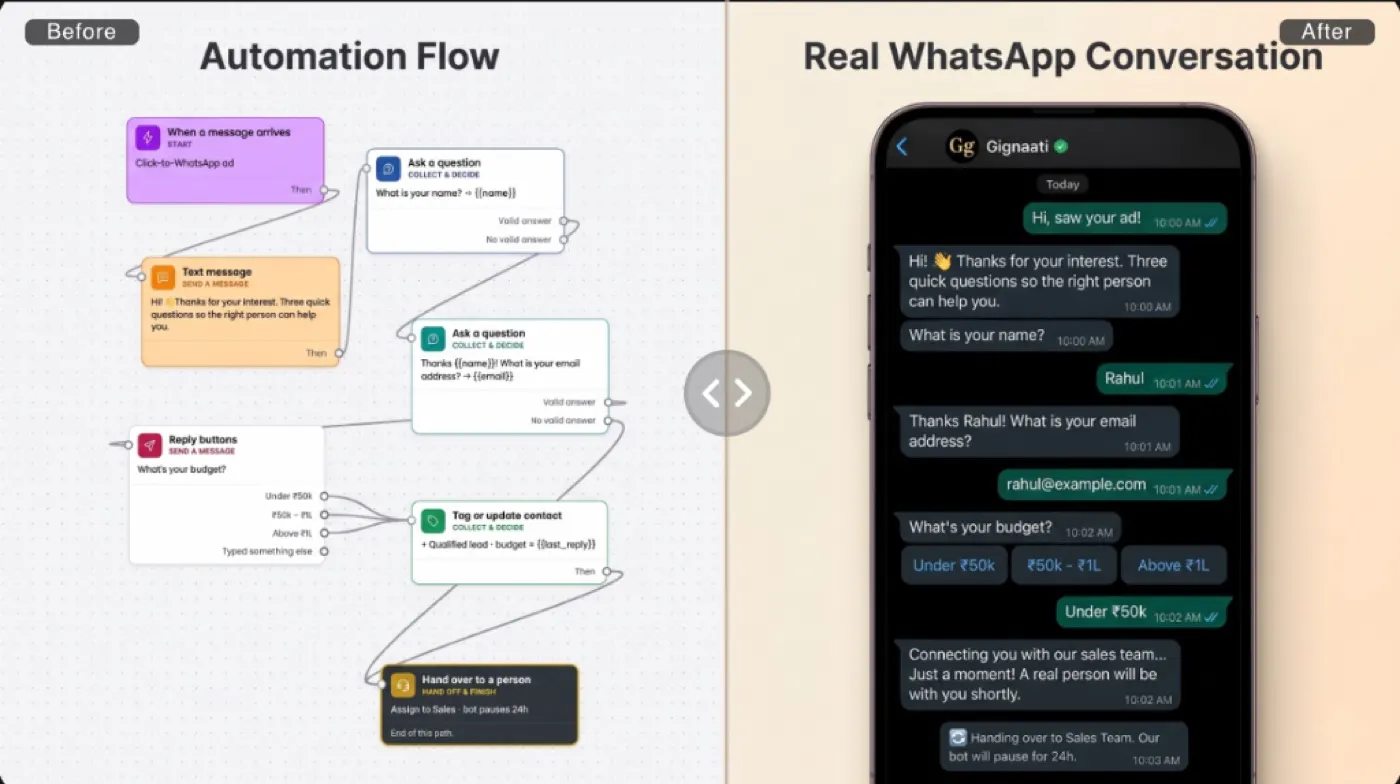
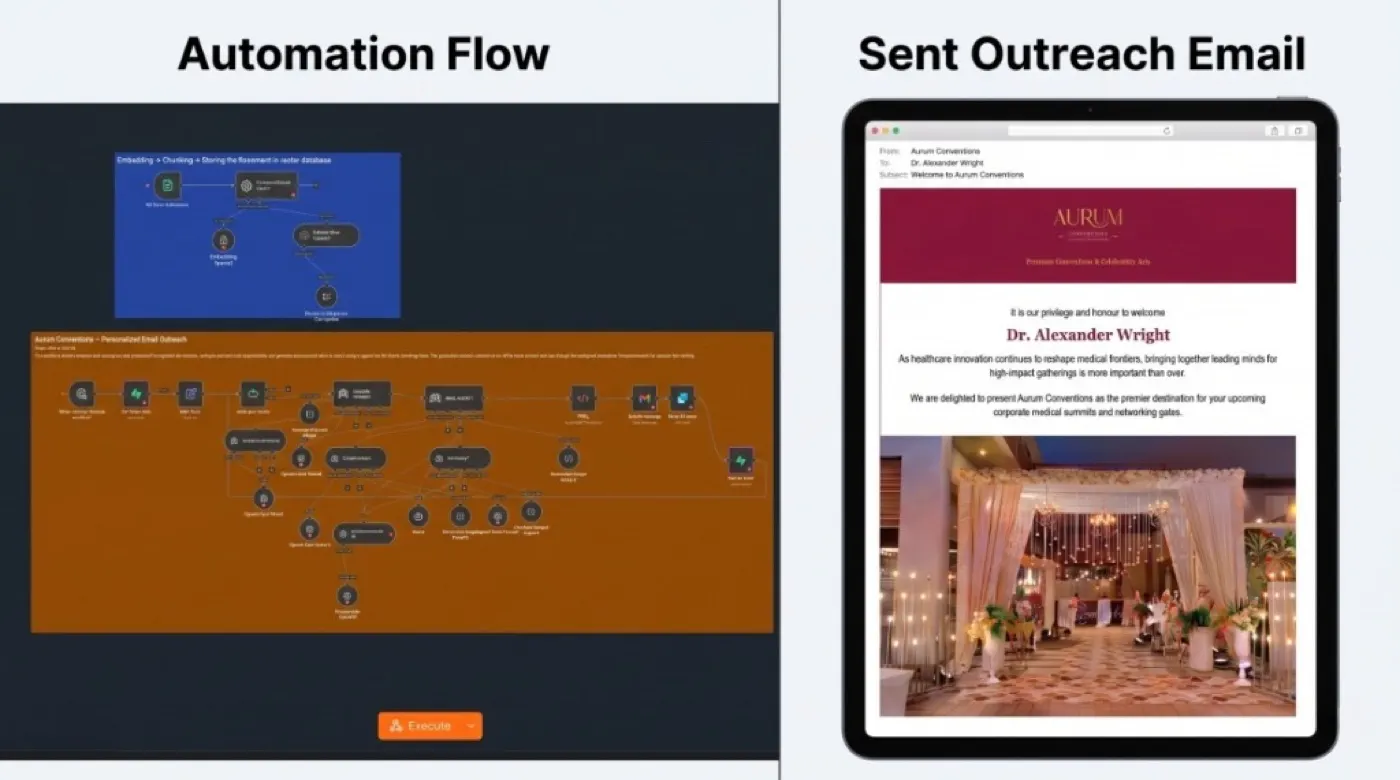
How to Choose an AI Automation Agency for Your Business
Use this checklist to evaluate an AI automation agency, compare proposals, check security and maintenance, and avoid paying for unnecessary complexity.
Costs & hiring · 5 min read · Kriyvo journal

In this article
Why choose an AI automation agency?
An automation agency can help a business understand which processes are suitable for automation, connect its existing tools, build and test workflows, and plan for maintenance. The value should come from solving a business problem—not from adding AI to a process simply because the technology is available.
A good provider should be able to explain what will be automated, what will remain manual, what data is needed, what could fail, and how the business will measure the result.
1. Start with the business problem
Before discussing tools, write down:
- The current process
- Who performs it
- How often it happens
- Which systems are involved
- Where delays and errors occur
- The expected improvement
- The risks of an incorrect action.
A provider should help clarify the scope if the problem is not yet well defined. Be cautious if the first conversation jumps straight to an expensive AI agent without understanding the process.
2. Ask for a clear solution design
A useful proposal should explain:
- The trigger and main workflow steps
- Systems and integrations required
- Data inputs and outputs
- AI components and their specific role
- Validation and approval points
- Error handling and human handover
- Security and access requirements
- How the result will be tested
- What is included in delivery and ongoing support.
Ask the provider to distinguish confirmed capabilities from assumptions that still need a technical test.
3. Evaluate practical experience
Relevant evidence is more useful than broad claims about being an AI expert. Ask for a demonstration, sample workflow, or case study that explains the problem, approach, limitations, and outcome.
Useful questions include:
- Have you connected systems similar to ours
- How do you prevent duplicate records or repeated actions
- What happens if an external API fails
- How do you monitor workflows after launch
- How are AI errors detected
- Can our team understand and maintain the system
- What parts depend on a third-party provider?
A provider should be honest about what they have not built before and how they would validate it.
4. Review security and data handling
Automation may connect customer records, messages, documents, and internal systems. Ask:
- Where will data be processed and stored
- Which third-party services receive data
- How are credentials stored and rotated
- Who can access production systems
- What information appears in logs
- How long is data retained
- How are backups and recovery handled
- How are permissions revoked when a team member leaves
- What happens if a vendor changes its terms or discontinues a feature?
The right controls depend on the data and applicable legal requirements. Do not send sensitive information to a provider before the data-handling arrangements are understood.
5. Check ownership and portability
Clarify who owns the workflow configuration, custom code, documentation, prompts, and business data. Confirm how the business can access its own accounts and what happens if the engagement ends.
Prefer arrangements that avoid unnecessary dependence on one individual. Documentation should explain deployment, credentials, failure handling, and how to disable the workflow safely.
6. Understand the full cost
Compare proposals using the same scope. Separate:
- Discovery and planning
- Implementation
- Subscriptions and hosting
- AI usage
- Messaging or API fees
- Maintenance and support
- Future changes
- Training and documentation.
Ask what is excluded and what might create additional charges. A low implementation quote may not include monitoring, troubleshooting, or ongoing changes.
7. Ask how success will be measured
Agree on a baseline and measurable targets before work begins. Depending on the workflow, metrics might include:
- Time spent per case
- Completion and error rates
- Response time
- Manual correction rate
- Qualified leads
- Booking completion
- Cost per processed item
- Customer satisfaction.
Avoid guarantees that cannot reasonably be supported. A provider can commit to defined deliverables and testing, but business outcomes can also depend on data quality, customer behavior, and third-party services.
8. Watch for warning signs
Be cautious if a provider:
- Promises perfect AI accuracy
- Cannot explain how errors are handled
- Ignores consent or privacy
- Requests broad account access without justification
- Refuses to document the solution
- Cannot identify third-party costs
- Proposes automating every process at once
- Claims AI can replace human judgment in every situation
- Cannot define a practical acceptance test.
9. Compare proposals fairly
Use a consistent scorecard:
- Business understanding: Does the proposal address the actual problem?
- Technical fit: Does it work with our current systems?
- Reliability: Are retries, validation, and exceptions covered?
- Security: Are access and data handling explained?
- Transparency: Are scope, exclusions, and costs clear?
- Maintainability: Is documentation and handover included?
- Measurement: Are success criteria agreed in advance?
- Support: Who handles incidents and future changes?
Choose based on fit and evidence, not just the number of features in the proposal.
10. Start with a pilot
A small pilot should prove that the workflow works with realistic data and failure scenarios. Agree on:
- The scope
- Test cases
- Success metrics
- Approval requirements
- Delivery date and dependencies
- Who reviews results
- The decision process for expanding or stopping.
A pilot reduces the risk of committing to a large build before the team understands the process and its constraints.
Questions to ask in your first meeting
- Which part of our process would you automate first, and why?
- What should remain under human control?
- Which systems and permissions are required?
- How will the workflow handle missing or incorrect data?
- How will we measure whether the project worked?
- What are the recurring costs?
- Who owns and maintains the solution after launch?
- What will you deliver if the pilot does not meet its success criteria?
Conclusion
The right AI automation agency combines technical implementation with process understanding, transparent costs, sensible safeguards, and ongoing support. A clear problem, a small pilot, and measurable acceptance criteria are usually more valuable than an ambitious promise.
Next step: Prepare a short description of one repetitive process and use it to compare providers on the same scope.
Suggested CTA: Talk to Kriyvo AI about a practical automation pilot.
Need this built? AI automation engineering
Connect business processes, APIs and AI where they add value — from lead processing and feedback routing to reporting.
See the serviceWritten for the Kriyvo journal. Product claims reported by third-party sources are not independent Kriyvo AI benchmarks.