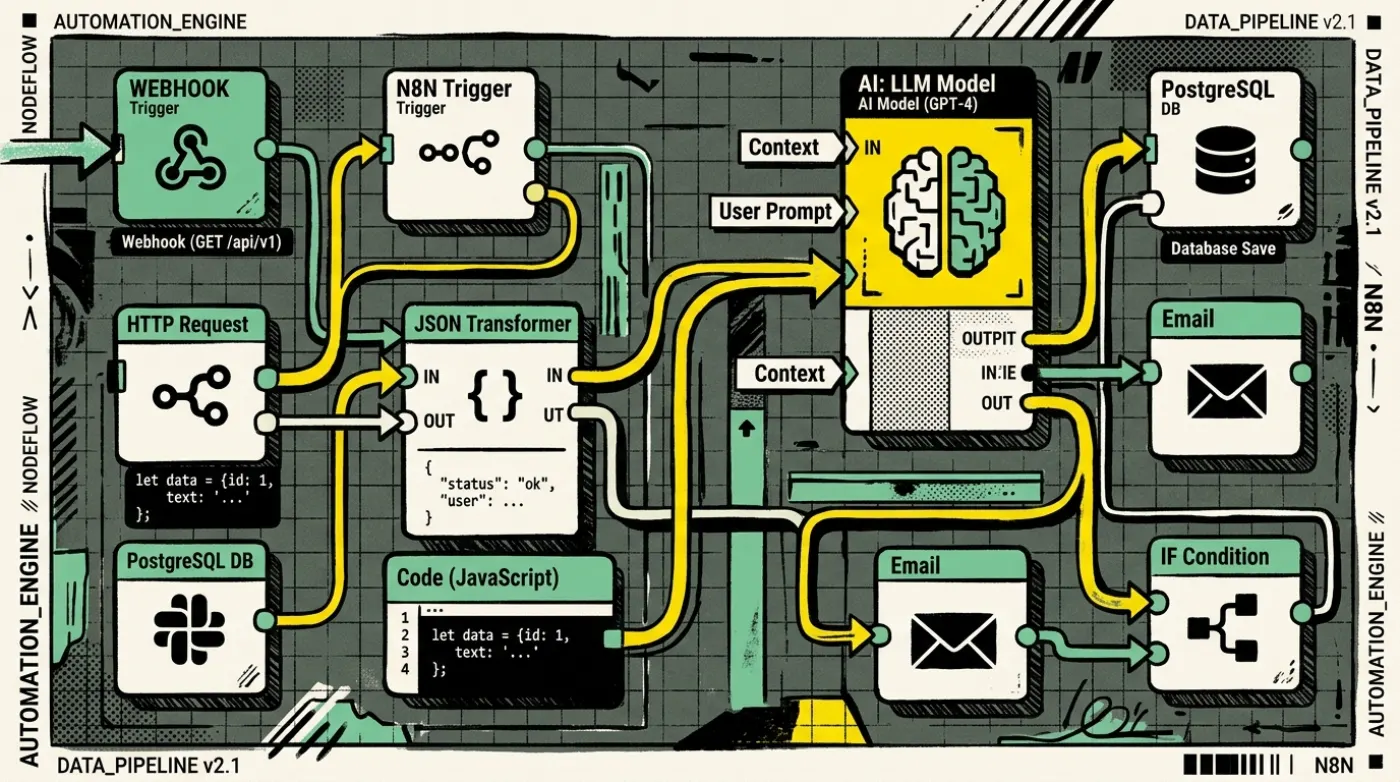
Building LLM Agents for Enterprise Workflows
How I design bounded LLM applications and agents with explicit state, limited tools and evaluation, with a separate look at the documented BMRC feedback-routing workflow.
AI & automation · 2 min read · Kriyvo journal
In this article
Introduction
Constrained finite-state machines beat unpredictable reasoning loops in regulated enterprise workflows.
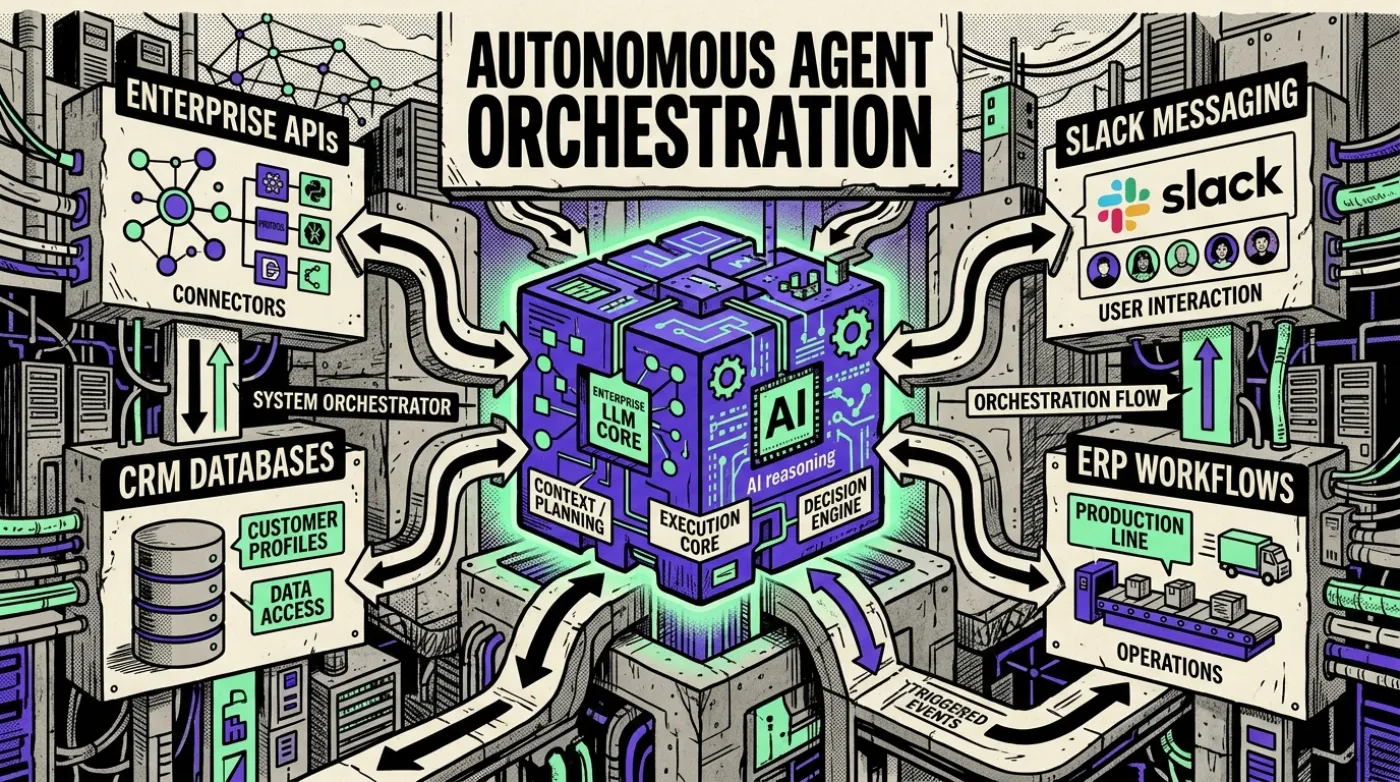
An AI agent is useful only when its allowed actions can be constrained and evaluated. I use explicit state and limited tools for agentic systems; the BMRC project discussed below is a separate documented n8n, OpenAI, Supabase and Gmail workflow, not evidence that it used LangGraph or RAG.
State machines beat free-form loops
The biggest mistake in agent design is an open-ended 'think until done' loop. In production I model agents as explicit graphs with LangGraph: each node has a clear responsibility, and transitions are constrained. This makes the agent auditable — critical for healthcare and enterprise compliance.
Grounding agents with RAG
Retrieval is relevant when an application needs approved, changing source material, but it is not required for every agent. The retrieval layer and the action workflow should be evaluated separately.
The rule I follow
Give the agent the smallest possible action space, the richest possible context, and full observability. Autonomy without auditability is a liability, not a feature.
Need this built? n8n workflow automation
Maintainable n8n workflows for API and CRM integrations, AI-powered steps, lead processing, logging and failure handling.
See the serviceWritten for the Kriyvo journal. Product claims reported by third-party sources are not independent Kriyvo AI benchmarks.