Gemini 4 Argon Review: Features, Pricing, Real-World Coding Tests, and Limitations
A practical Gemini 4 Argon review covering official capabilities, API pricing, coding performance, early user feedback, limitations, and who should try Google's new AI model.
AI perspectives · 8 min read · Kriyvo journal
In this article
Introduction
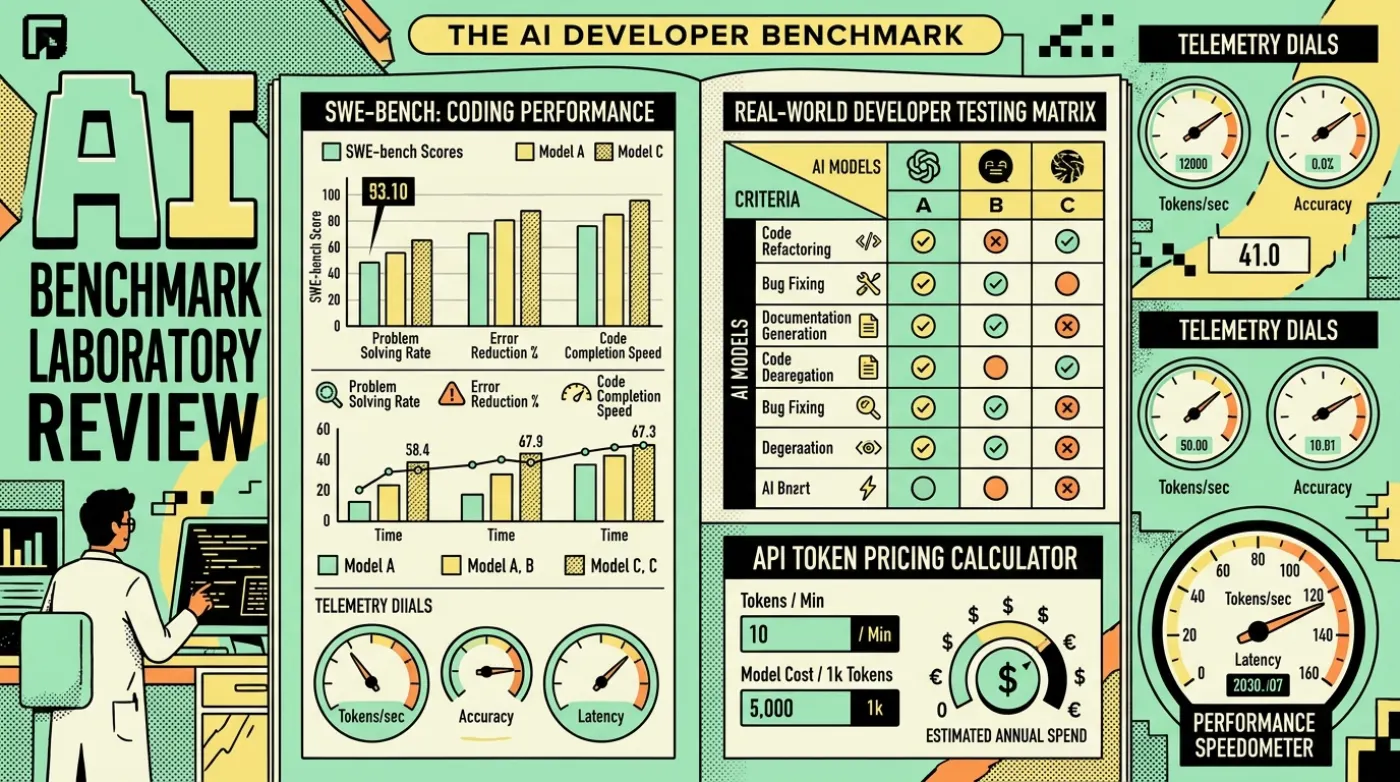
Developer benchmark lab: SWE-bench coding scores, latency dials & API pricing calculator
The most relevant news articles and launch reviews grouped by what they help you understand.
Covers availability, pricing, industry use cases, and Google's competitive position.
Frames the release as Google's attempt to return to the leading edge of frontier AI and examines its claims against rival models.
Tests practical tasks involving website creation, videos, data analysis, and documents. The author reports useful outputs but also an unsupported claim in a launch summary, making this a relevant counterpoint to purely promotional coverage.
Real user discussions and community post titles comparing practical performance, benchmarks, and quota limitations.
The author tested Argon against Claude Opus 5.5 on a real feature for a production Python backend. A GPT-6 Astra judge scored the two plans 59/100 for Argon versus 77/100 for Opus 5.5. The author cautioned that more testing was needed and questioned context compaction speed.
The main community discussion is mixed. One commenter praised Argon's clear, logically structured answers and said they would use it for non-coding work. Others questioned its coding performance, total cost per task, and whether official benchmark wins translate into practical results.
An early Ultra subscriber described promising Blender 3D scripting and complex HTML results, comparing them favorably with Opus 5.5. Replies were more cautious, pointing to independent benchmark standings and average performance.
Google launched Gemini 4 Argon on October 13, 2026, positioning it as a reasoning model for complex software engineering, multi-step agents, scientific problem-solving, and demanding professional workflows. Unlike a lightweight chatbot designed mainly for quick answers, Argon is intended to work through longer tasks that require context, planning, tool use, and sustained reasoning.
But launch claims are only one part of the story. Developers also need to know how the model behaves on real codebases, what it costs to run, where it is available, and whether it is a better fit than established alternatives. This early review combines Google's current documentation with public developer reports. It is not a claim that we independently benchmarked Argon in a controlled lab.
The early verdict: Gemini 4 Argon looks promising for long-context, multimodal, and agentic work. However, early user reports do not establish a universal coding winner, and access, tool compatibility, and total cost should be tested in the workflow you actually use.
What is Gemini 4 Argon?
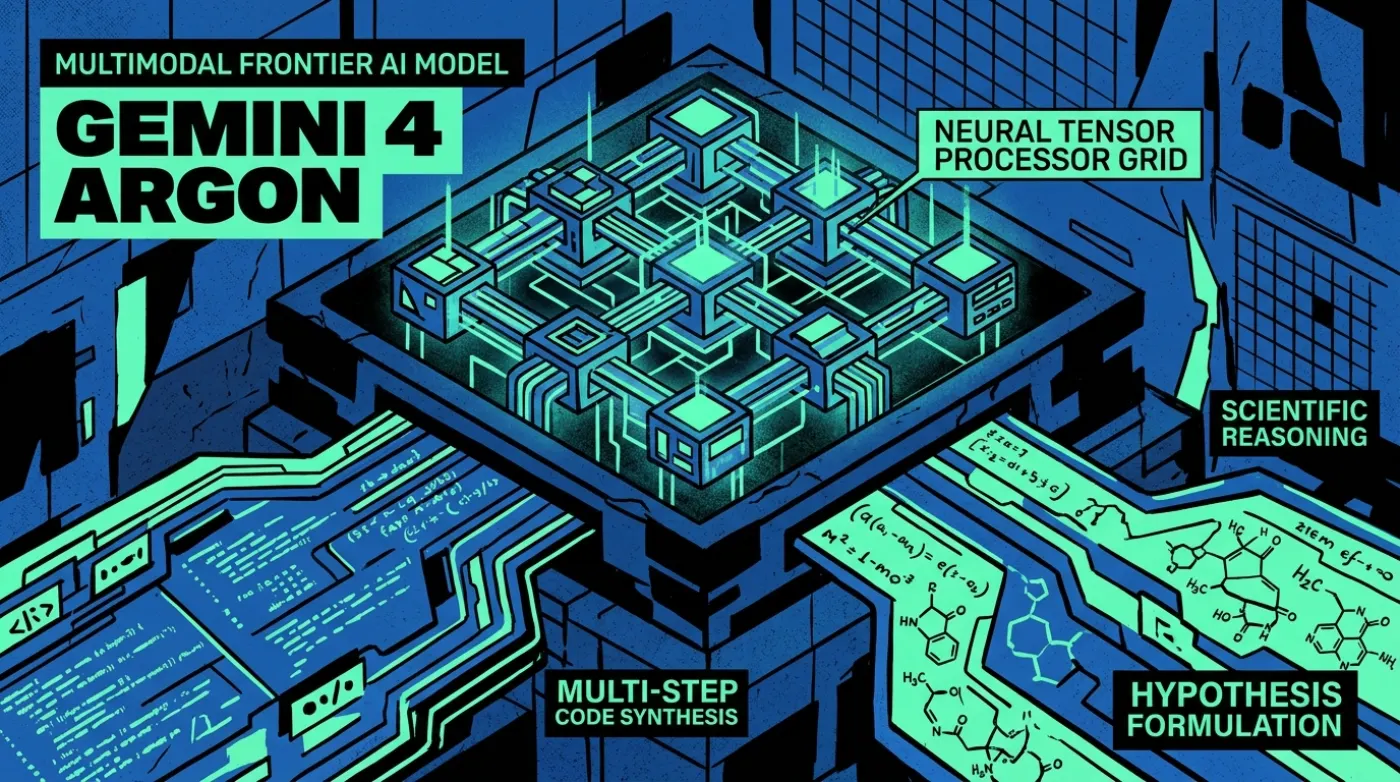
Gemini 4 Argon is Google's flagship reasoning model in the Gemini 4 family. Google's developer documentation lists its model ID as gemini-4-argon and describes it as a model for complex software engineering, mathematical and scientific problem-solving, autonomous multi-step agents, and long output generation.
The model accepts text, images, video, audio, and PDF inputs, while its documented output is text. The API supports capabilities including function calling, code execution, file search, search grounding, URL context, structured outputs, and computer use in preview. Those features make it relevant not only to chat interfaces but also to applications that read documents, call tools, inspect code, and carry out multi-step workflows.
Sources: Google Gemini 4 Argon API documentation · Google DeepMind model card
Gemini 4 Argon features that matter
1. A unified context window of about one million tokens: The API documentation lists a unified input-and-output context limit of 1,048,576 tokens. The standard synchronous maximum output is listed as 65,536 tokens, with long-decode workflows supporting output of up to one million tokens. These limits are not interchangeable: the unified context limit covers the input and output together, while long decoding is a distinct generation mode with additional setup considerations. A large context window can help when a task involves several documents, a large codebase, long technical specifications, or a chain of related steps. It does not guarantee that the model will correctly understand every file or make every change safely.
2. Tool use and agent workflows: Argon supports function calling and code execution, with computer use marked as preview in Google's model documentation. These capabilities can be useful when the model needs to do more than write a block of code—for example, inspect a result, call a service, run an analysis, or use an application as part of a longer task. For production agents, support for tools is only the starting point. Teams should also test permission handling, retries, unexpected tool output, error recovery, and whether the model asks for confirmation before taking irreversible actions.
3. Multimodal input: Argon accepts more than plain text. Its documented inputs include image, video, audio, and PDF content, which may help with tasks such as interpreting screenshots, reading technical documents, or reasoning over recorded demonstrations. The API's documented output is text, so do not assume that the model itself generates images or audio merely because it can accept those inputs.
4. A focus on complex professional tasks: Google positions Argon for software engineering, finance, legal work, science, and cybersecurity. The company's launch materials report a score of 77.9% on DeepSWE v1.1, rank Argon first on its Vals Index, and report a score of 51.3 on AutomationBench. These are Google-reported results on particular evaluations, not proof that Argon will outperform every other model on every coding task. Benchmark methodology, task selection, tool access, and prompting all affect what a score means.
Gemini 4 Argon pricing: what developers should know
Google's introductory API rates are $2 per million input tokens and $10 per million output tokens through November 30, 2026. After the introductory period, the published rates become $4 per million input tokens and $20 per million output tokens. Confirm the current price sheet before deploying, because pricing and product terms can change.
Argon is also available through Google products, but app access and API billing are not the same thing. Google says developers and enterprises can use the API through AI Studio and the Gemini platform; eligible Google AI Pro and Ultra subscribers can use Argon in the Gemini app and AI Mode in Search, while Antigravity access is more restricted to Ultra subscribers at launch.
Suppose a workload uses one million input tokens and generates 200,000 output tokens, without cached input or other charges:
This is a simple token-cost illustration, not a forecast of the cost for a complete project. Actual workloads may use different token volumes and may incur costs for tools, repeated attempts, cached input, or other platform features.
Sources: Google's Gemini API model page · Google launch announcement and pricing note · Reuters launch coverage
What are developers saying about Gemini 4 Argon?
Early public reactions are mixed, which is normal for a model that has only just started rolling out. They are useful as leads for what to test, but they should not be treated as statistically representative user research.
Positive reports: readable answers and exploratory work: In the Hacker News launch discussion , some commenters praised Argon's structured, direct answers and described it as useful for non-coding work, including exploring questions through small simulations. These reports suggest that writing style, clarity, and analytical exploration may be part of its appeal.
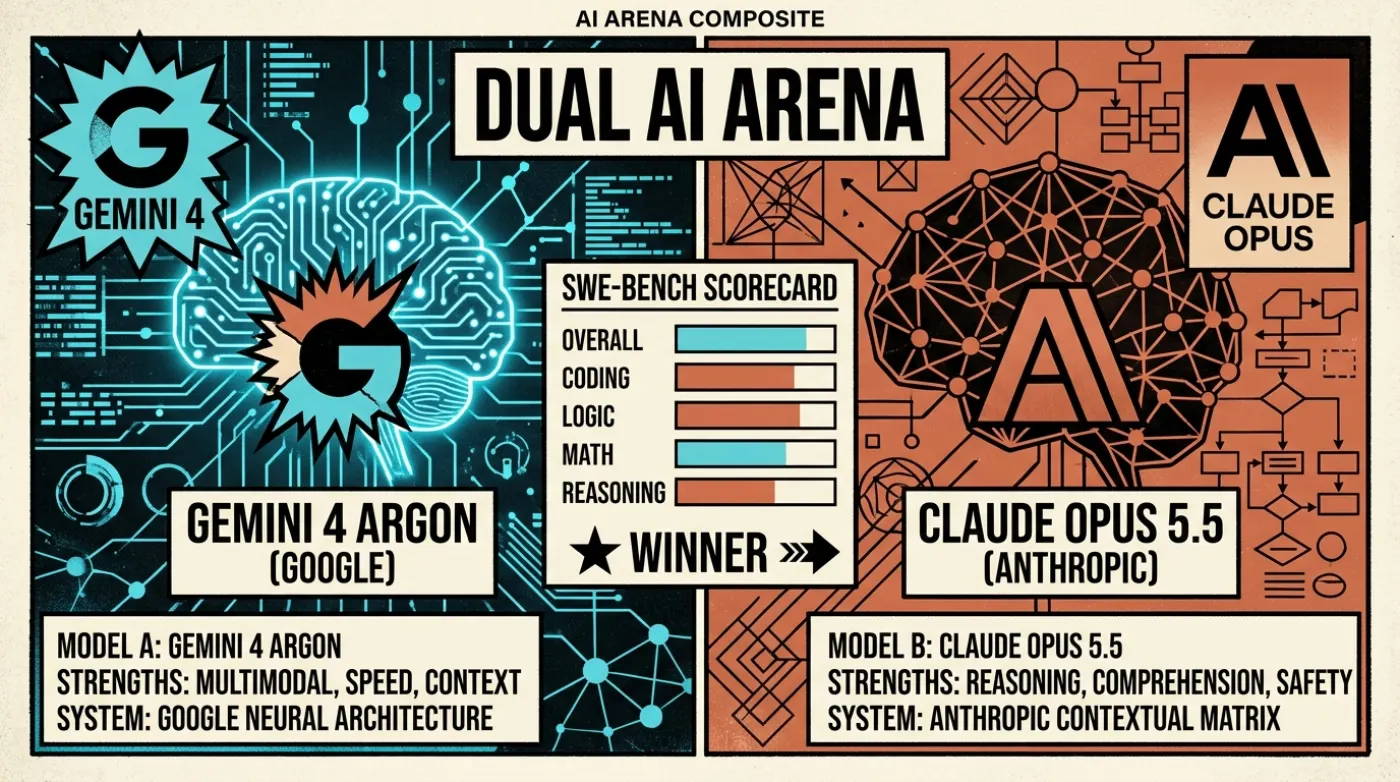
Mixed reports: coding plans and completed implementation are different tests: One Reddit user testing Argon against Claude Opus 5.5 described using both models to prepare implementation plans for a real feature in a production Python backend. The user then had GPT-6 Astra act as a judge and reported scores of 59/100 for Argon's plan and 77/100 for Opus 5.5's plan.
That is worth noting—but it is not a definitive model benchmark. It was one person's test, it evaluated plans rather than independently verified completed implementations, and the judge itself was another model. Different requirements, prompts, tools, effort settings, or reviewers could change the outcome.
The broader Hacker News discussion includes both enthusiasm and skepticism. Some developers favor Claude for agentic coding in their existing setup, while others like Argon's communication style or non-coding performance. The sensible conclusion is that the best model depends on the task and the surrounding toolchain—not that one thread settles the comparison.
How to test Gemini 4 Argon on a real project
Use a safe branch or sandbox and give Argon a well-scoped issue from a repository it has not already seen. Run the same issue through your current model with equivalent instructions, tools, time limits, and permission settings. Avoid comparing one model with access to tests and tools against another that does not.
- Did the patch pass existing and new tests?
- Did it meet every stated acceptance criterion?
- How many manual corrections and retries were needed?
- Did it introduce unrelated changes or regressions?
- How long did the task take from prompt to verified result?
- What was the total token and API cost?
- Did the model follow repository conventions and explain key trade-offs?
For a fairer review, repeat the test over several tasks—bug fixes, feature work, refactoring, and code review—and have a reviewer score the results without knowing which model produced each patch.
Verdict: should you try Gemini 4 Argon?
Gemini 4 Argon is worth evaluating if you need long-context reasoning, multimodal document understanding, tool use, or multi-step workflows and you already use Google's developer ecosystem. Its introductory API pricing also makes controlled experiments more economical than the later published rates.
For coding, however, do not switch your whole workflow based on a launch benchmark or a single review. The right decision is the model that reliably completes your actual tasks with the fewest corrections, acceptable latency, and a cost your team can justify. Run a small, repeatable evaluation before you commit.
Need this built? AI chatbot for your website
A website assistant that answers from your approved content, captures enquiries and hands conversations over to your team.
See the serviceWritten for the Kriyvo journal. Product claims reported by third-party sources are not independent Kriyvo AI benchmarks.